Dear Blog,
In paleography, the study of historical handwriting, one sifts through thousands of handwriting samples. From the spindly to the straight, from the cramped to the flowing. I’ve familiarized myself with Dr. Pettus’ wide cursive and Robert Swain’s tall letters. Here are some particularly interesting examples:
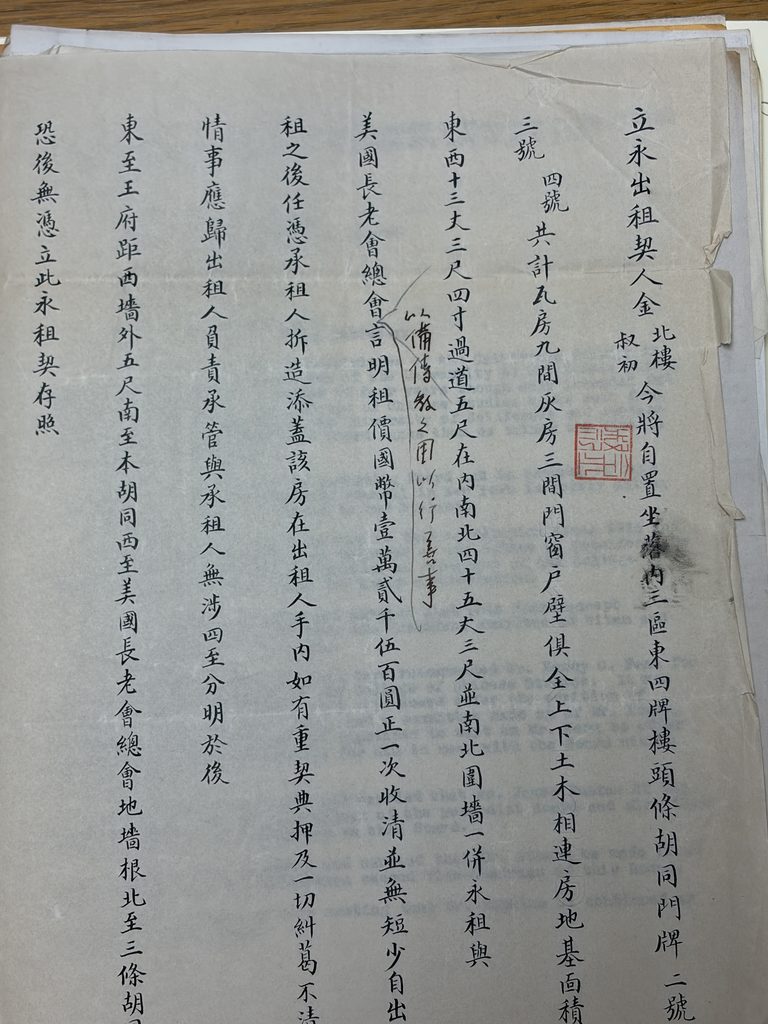

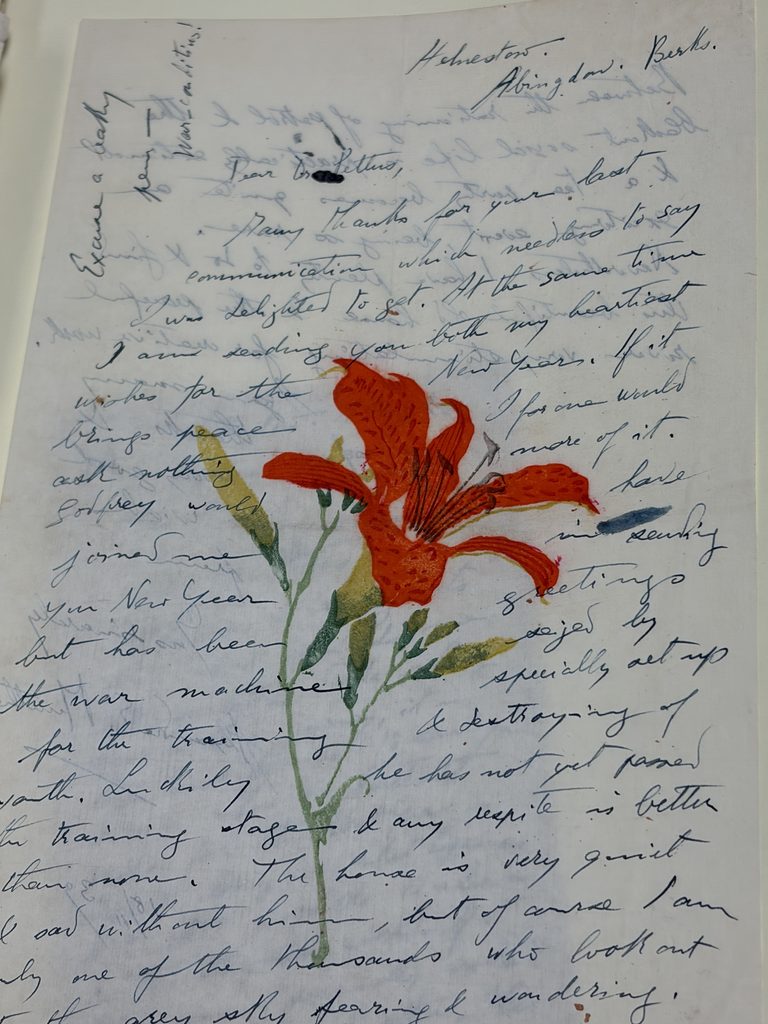

Reading these texts has been difficult precisely because of the wide variety of hand writings. Shorthand, nicknames, and abbreviations make deciphering the underlying meaning difficult, and references to past events that both writer and reader may remember with clarity are completely unknown to the researcher. When I page through each delicate leaf of translucent paper, or open letters that were last touched in the 1950s, the distance between now and then becomes enormous and unavoidable. Yet, their slips of the hand and the awkward moment where you reach the end of the line but your word isn’t quite finished speak to a broader, human experience of handwriting.
Pettus’ Chinese handwriting has also become familiar to me. For a non-native speaker, Pettus writes with significant energy and care.
Returning to the sea of handwriting,
Evelyn Hao