The Book of Lists

“First, we had to ask ourselves: What is a list? The Random House Dictionary defines a list as a series of names or other items written or printed together in a meaningful grouping so as to constitute a record.’ A list, we found is more, much more.” (xv)
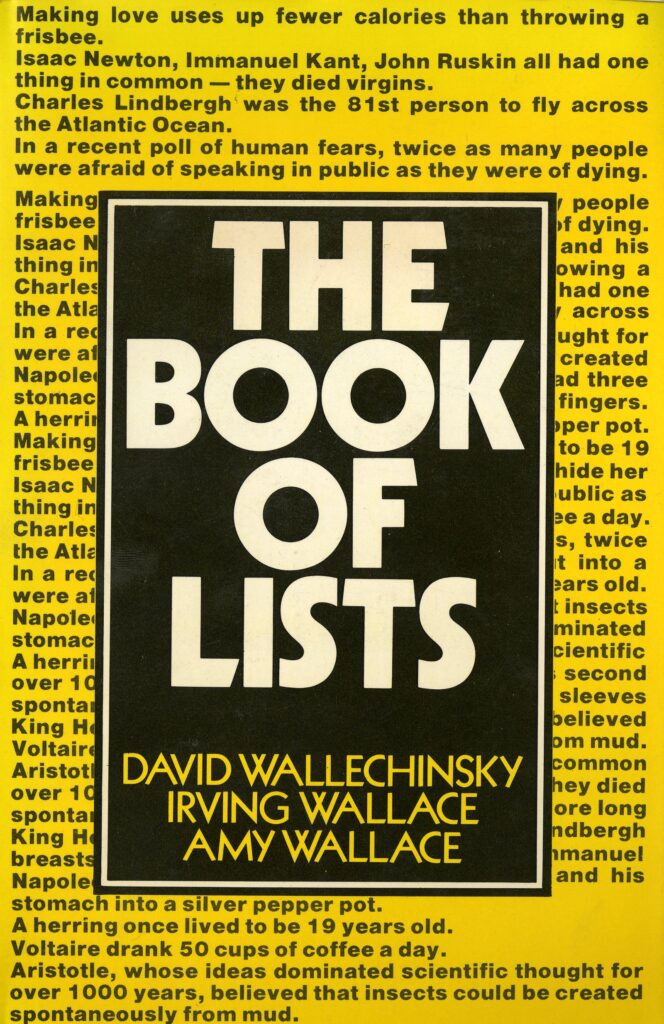
British First Edition Cover, 1977

The Book of Lists, originally published in 1977 and co-authored by David Wallechinsky and Amy Wallace, is a miscellany of trivia and facts that resemble fiction. The book introduces and applauds the novelty of the reader with an Oscar Wilde’s quote, “the only sin is to be bored.” Wallace insists that “it is an equal sin to be boring.” A sin for which, as Wallace continues, the “Book of Lists readers are quite unblemished by: for we place high value on curiosity.” (xiii)

Promotional Ad, 1978

The variety of lists range from 30 famous left-handed people such as Carl Philipp Emanuel Bach and Alphonse Bertillon, 20 largest lakes including Malawi and Superior, 20 endangered species from donkeys to bears, 20 wonderful collective nouns for animals like the classic murder of crows or the lesser known clowder of cats, 13 longest words in the English language from 27 letters to 3,600 letters, and 12 epitaphs that never were including George Bernard Shaw’s quote “I knew if I stayed around long enough, something like this would happen.”

Stay tuned, Chelsea Fox

The ‘Almighty’ Update

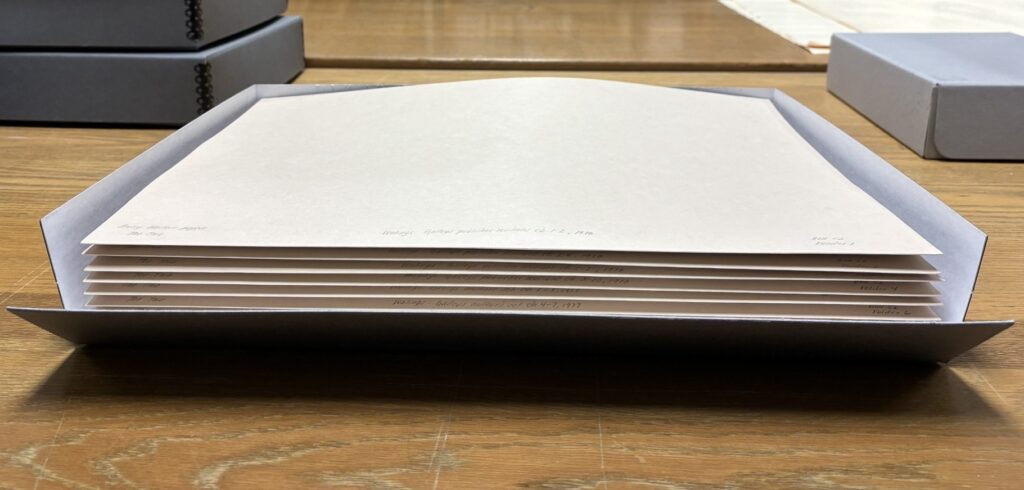
The previous questions posed about the ranking of pace and preservation culminated in the processing of the ledger sized galleys. Previously kept folded like a book proof and nestled into inefficient letter-sized record boxes, the galleys are now in ledger-sized containers allowing for the papers to be housed flat.

Images: (Left to Right) folded galley chapter, organized galleys, flat galley chapter

Complete Ledger-Sized Box

The emphasis on the preservation of the documents will ultimately prolong the usage of these archival records by minimizing physical deterioration—increasing the prevention of information loss and capacity for the archives to house the records most productively.

Stay tuned, Chelsea Fox

Audiovisual Media

The 2015 Smithsonian Institution article, “Putting Archival Audiovisual Media into Context: An Archival Approach to Processing Mixed-Media Manuscript Collections” by Megan McShea, provided insight into the practices of processing, arrangement, and accessibility for audiovisual materials. A key element was delving into the value of “traditional processing workflows” that offered structure to planning and guidelines. The objective: “unlocking the content” of these records.

The term of “audiovisual” affords a differentiation between written records and non-textual media. The SAA Dictionary of Archives Terminology outlines “audiovisual” as media with “sound and pictorial attributes.” In a mixed-media collection, like-materials are housed together due to different condition requirement (acidity, preservation, reformatting, etc.). However, as McShea outlined, audiovisual materials should still be “effectively described in the aggregate” and not isolated from the collection completely.

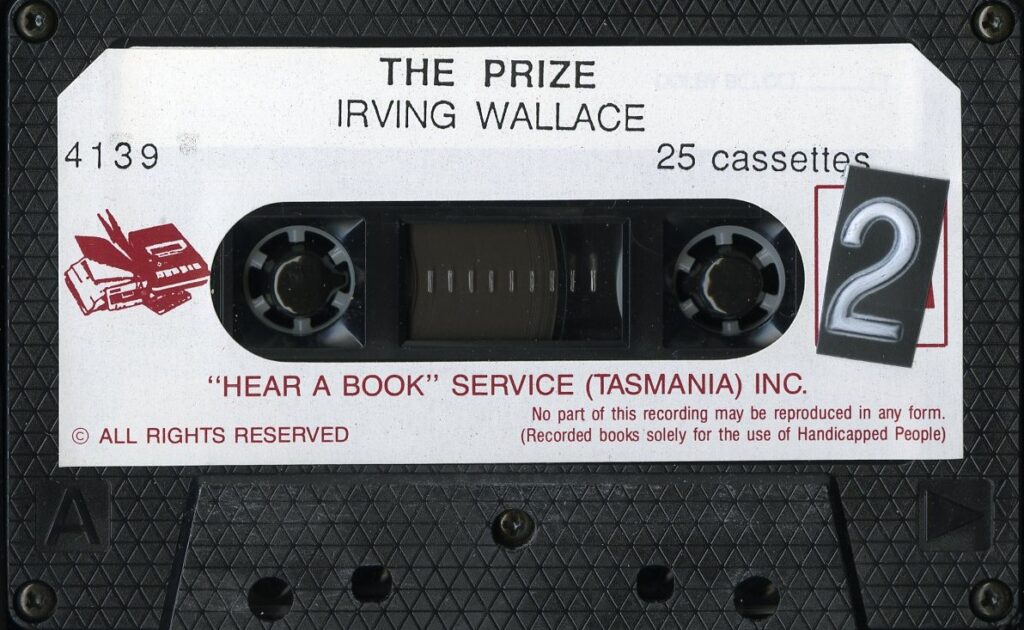
“Hear a Book” Cassette Booklet Cover, 1987

The Irving Wallace Papers contain a variety of audiovisual materials including, VHS tapes, vinyl, cassettes, DVDs, illustrations, posters, photographs, and book cover proofs—all woven throughout the collection. An audiovisual item that I recently encountered was a 1987 audio cassette series of a recorded book reading for The Prize. Produced by the “Hear a Book” Service in Tasmania, Australia, this cassette series is narrated by Bobby Roberts. The book reading unfolds the story of The Prize as “an imaginative insight into the minds, motives, and morals of six fictional Nobel Prize winners.”

Stay tuned, Chelsea Fox

Works Cited

Dictionary of Archives Terminology. SAA: Society of American Archivists, 2025. https://dictionary.archivists.org/entry/audiovisual.html

McShea, Megan. “Putting Archival Audiovisual Media into Context: An Archival Approach to Processing Mixed-Media Manuscript.” Archives of American Art, Smithsonian Institution, 2016. https://www.clir.org/wp-content/uploads/sites/6/McShea.pdf

Significa

“The story was started by a gossipy French observer, who distorted what he had seen… We hope our readers will find that everything else that survived our fact checking to surface in this book is true. And we also hope these facts are full of wonder and surprise.” (xxiii)

E. P. Dutton, 1983

Significa, originally published in 1983, is a collection of facts traversing a broad subject range including animals, history, law, literature, science, transportation, health, and more. From Queen Elizabeth II’s interest in heavy mechanics, Sybil Ludington’s midnight ride in 1777, corsets saving lives in 1840, flock of sheep on the White House lawn in 1917, astronauts passing customs, and the world’s biggest 1,400-pound camera in 1899 for the Paris Exposition, the facts and figures of this book are indeed “full of wonder and surprise.”

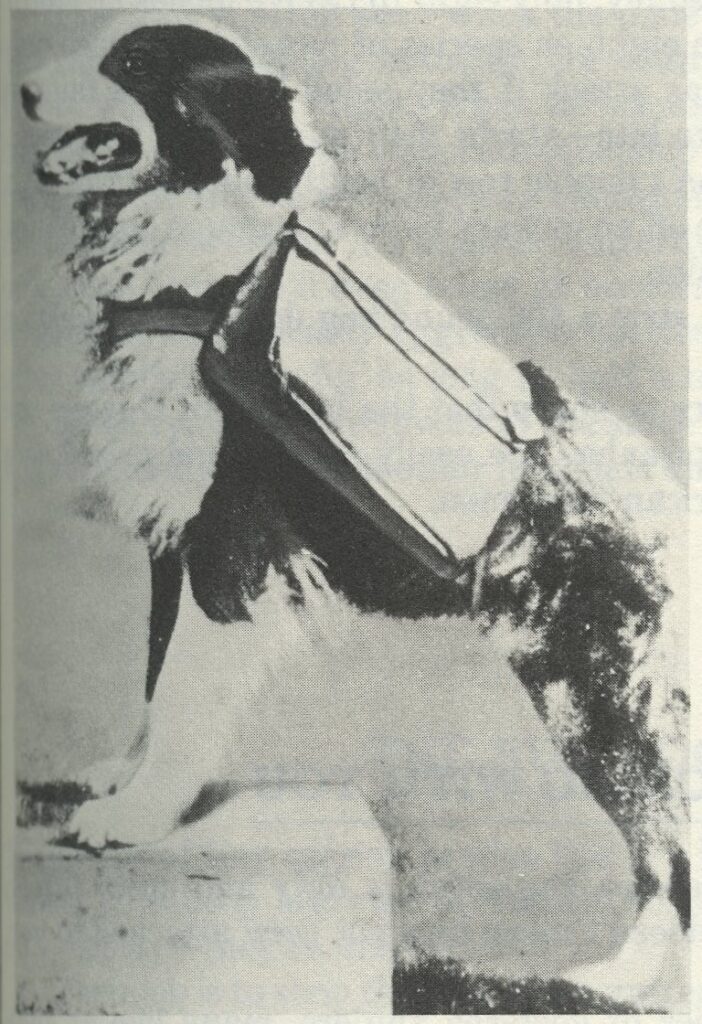
Maildog Dorsey “Neither rain, nor wind…” (99)

From “Chapter 4: Remarkable Animals” comes a story about a local postmaster and his dog. Jim Stacy took in Dorsey, a black-and-white shepherd dog, who would go on to deliver correspondence for the town of Calico, California from 1883 to 1886. When Stacy was unable to complete his route due to an illness, Dorsey was sent off with his saddlebag harness to boldly become a mail carrier of his own. Knowing the route from following Stacy for so long, Dorsey assuredly undertook the task and eventually received his own official mail route before moving to San Francisco with Stacy. Dorsey is still remembered in Calico, California today.

Stay tuned, Chelsea Fox