Until Next Time

The CCEPS program has provided collaboration on an analog and digital project here at Special Collections. The opportunity to process, arrange, and describe the Irving Wallace papers has exponentially developed my archival skills—the day-to-day of archives, the detailed problem solving, the visual and strategic organization, the ins-and-outs of archival standards, and the methodology and creativity of working with records.

From beginning at box #42 to currently working on box #128, this collection and I have undergone a transformation. Through the CCEPS program, I have developed insight into the best practices of archives and engaging with complex archival capabilities. You will find me in the archives, looking forward to learning, asking more questions, and looking for more history to uncover.

Until then, Chelsea Fox
Irving Wallace papers

What does this collection provide to researchers ?

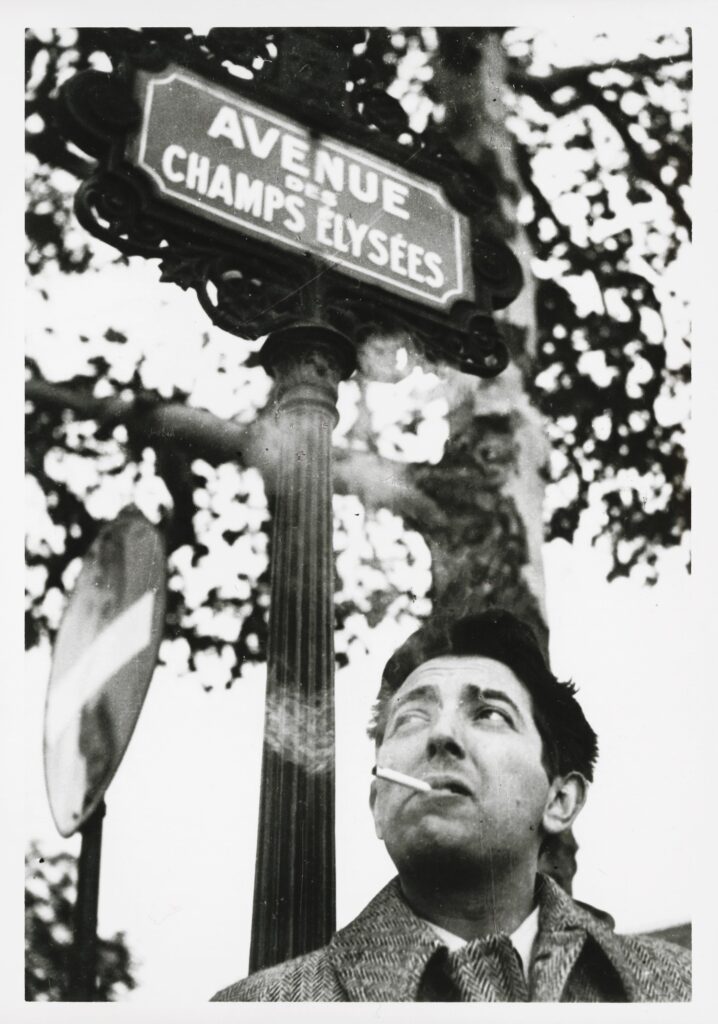
Irving Wallace in Paris, 1946

The Irving Wallace papers has so much to offer—spanning the breadth of his career and providing a close look into how he became a writer read by millions. By viewing the collection with an  open possibility for research, the insight these records provide broadens. From looking into the 20th century publishing industry with processes of editing and publication to the film industry with one-of-a-kind draft and notes to the one-of-a-kind records of certain individuals that crossed his path, the Irving Wallace papers is a collection to look out for!

Schedule your reading room appointment today, and make your own Special Collections account!

See you in the archives, Chelsea Fox

Film and Screenwriting

“We give you a spectacle of unparoled beauty, Whirling’s World Famous Parade!” —Vincent Price, The Big Circus

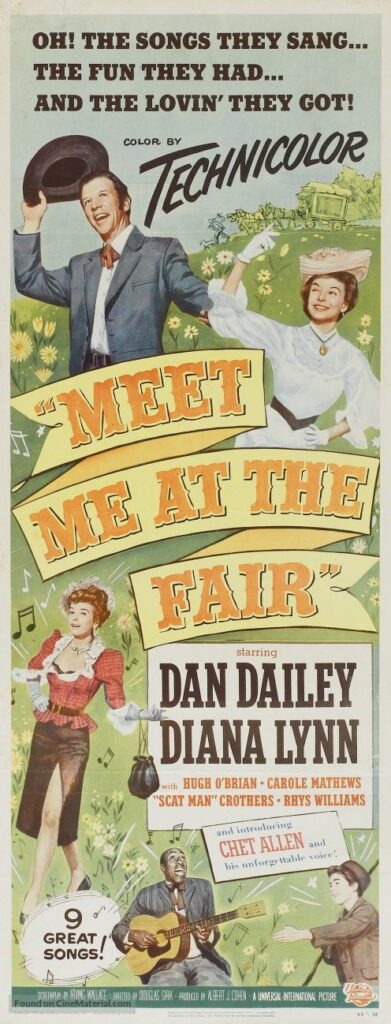
“Meet me at the Fair,” 1953

Although many of his books were later adapted into film throughout the 1960s and 1970s, Irving Wallace spent many years from the late-1940s to the early 1950s dedicated to freelance writing as a Hollywood screenwriter. Whether writing screenplays for Warner Brothers, 20th Century Fox, Universal, R.K.O., or Paramount, Wallace certainly held an interest in the film industry as he also worked as editor for the Hollywood fan magazines Modern Screen and Photoplay. Wallace’s film credits include many films such as The West Point Story (1950), Young Wives’ Tale (1951), Meet Me at the Fair (1953), Split Second (1953) and The Big Circus (1959).

In the Irving Wallace papers, there are a range of writings that are dedicated to film, television, and theatre. From screenplays, articles, scripts, treatments, plays, manuscripts, newspapers, and magazines, this collection delves into the formative beginnings of Wallace’s career as a writer and the central role the film had on his foundations.

Stay tuned, Chelsea Fox