Correspondence

Letters, telegrams, memos, and more…

Metro-Goldwin-Mayer Pcitures Inter-Office Communication,
March 28, 1950

The Irving Wallace papers contain a range of photocopies and original letters, memos, and telegrams, from editors, agents, readers, and researchers. Alongside records, Wallace wrote reference notations overviewing the contents. Wallace intended the correspondence to complete a portrait of his life, stating they were a “picture of [his] ups and downs—and growth—in many fields of writing.”

Ray Bradbury to Amy Wallace, 1969

A letter that stood out to me was between Amy Wallace and Ray Bradbury. A fourteen-year-old Amy Wallace, Irving Wallace’s daughter, wrote to Ray Bradbury in January of 1969. Bradbury answers her, detailing his view on the Vietnam War, the relationship between younger generations and revolution, how his stories were rooted in imagination not fact, and his love for “bad, good, mediocre, beautiful, wonderful, and despairing” movies. Bradbury spoke to the François Truffaut 1966 Fahrenheit 451 film having “one of the most beautiful endings of any film… not because it was my ending, it wasn’t it was Truffaut’s.”

Stay tuned, Chelsea Fox

Encapsulation

What is encapsulation? Why is it important?

Book Cover Galley
“The Book of Lists”

The Irving Wallace papers have a range of ‘photo-ready’ international book cover galleys—poster-like items with a collage of title, author, and image clippings. However, over the years the tape and glue have lost its stickiness and the transparent cover page has undergone acidification. So, what is the solution?

Encapsulated Galley

Defined by the SAA Dictionary of Archives Terminology, encapsulation is the process of sealing an item “between two sheets of polyester film to provide support, to protect it from handling, and from the environment.” The polyester film sheets can be partially or fully sealed along the edges and are an efficient method of preservation. For these book cover galleys, sealing the materials with encapsulation keeps all those maneuverable pieces in their original place once again. Encapsulation is a common tool that, as illustrated by the NYPL, helps to “stabilize, store, and protect paper-based artifacts, especially fragile ones.” A sheer solution for prolonged maintenance.

Works Cited

“SAA Dictionary of Archives Terminology: Encapsulation.” Society of American Archivists, 2025. https://dictionary.archivists.org/entry/encapsulation.html

Qian, Shaoyi. “Encapsulation: A Useful and Versatile Tool for Book and Paper Conservation.” The New York Public Library, June 27, 2022. https://www.nypl.org/blog/2022/06/27/encapsulation-book-paper-conservation

A Family of Writers

“To be ones self and unafraid whether right or wrong is more admirable than the easy cowardice of surender to conformity.” — Irving Wallace

Golden Apple Publishers, 1976

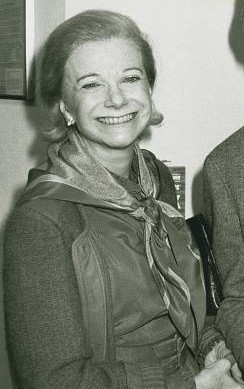
Sylvia Wallace, who was married to Irving Wallace, worked as editor of the Hollywood magazine Photoplay before writing books later in life. Sylvia meet Irving Wallace while working at Dell Books on the publication Modern Screen. Sylvia wrote two novels including The Fountains (1976) and Empress (1980), and took on the role of editor for family nonfiction anthology publications.

Penguin Books, 1984

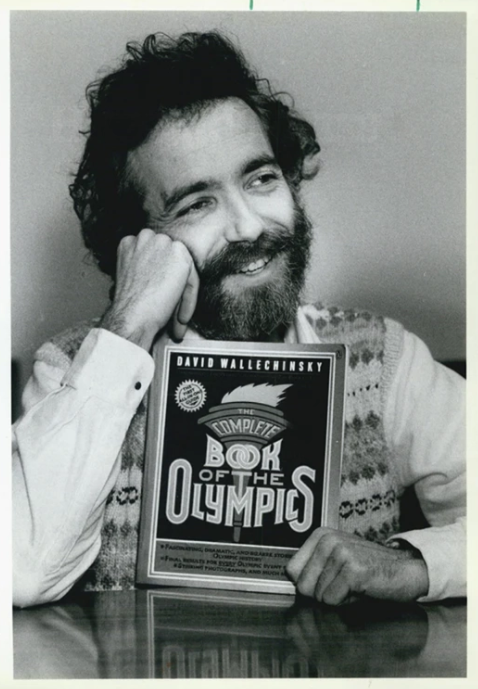
David Wallechinsky, known for his work as a commentator for NBC Olympic coverage, is the author of The Complete Book of the Summer Olympics and The Complete Book of the Winter Olympics series. David also co-authored works with his family including The People’s Almanac (1975-1981) and The Book of Lists (1977-1980) series.

Houghton Mifflin Harcourt, 1990

Amy Wallace, alongside her father and brother, co-authored and edited The Book of Lists (1977-1980) series, The Book of Predictions (1980), and The Intimate Sex Lives of Famous People (1981). Amy went on to write other publications, most well-known for The Prodigy: A Biography of William Sidis (1986), Desire (1990), and Sorcerer’s Apprentice: My Life with Carlos Castaneda (2002).

Stay tuned, Chelsea Fox

What is CCEPS?

The Claremont Center for Engagement with Primary Sources (CCEPS) offers “hands-on learning opportunities in Special Collections.” Including nearly 200,000 volumes of print and manuscript primary sources, the CC Special Collections spans 900 years. A CCEPS fellow collaborates on analog and digital projects from curation, research, design, processing, arrangement, or description. A key component includes sharing and updating along the way through the weekly Out of the Box blog posts. The objective of the fellowship includes developing skills that are “integral to the research, teaching, and learning mission of the library.” Check out more here: https://library.claremont.edu/sca/cceps/.

Each week, the CCEPS fellowship continues to be a highly valuable experience. The opportunity to arrange and describe the Irving Wallace papers has exponentially developed my archival skills—the day-to-day of Special Collections, the detailed problem solving, the visual and strategic organization, the in-and-outs of archival standards, and the methodology and creativity of working with records. This collection specifically has been a complex translation from a previous call number system into archival language. Looking forward to next week with more questions, documents, and history to uncover.

Stay tuned, Chelsea Fox

Considering the Researcher

The processing of the Irving Wallace papers is reaching a checkpoint. The nonfiction and fiction writings, or records associated with specific book titles, are nearly complete. So, what’s next?

Popular Culture Association Convention Brochure, 1974

The next materials in the collection include many more writings, correspondence, and research materials by Irving Wallace such as articles, essays, screenplays, treatments, plays, and short stories.

While looking over the proposed container list, I was paused by a question surrounding biographical materials. How expansive can a series be? I was reflecting on the context, subseries, alphabetization, and how to simplify a complex collection. And I was deliberating about how to represent the nuance between biographical and personal records.

Authors Guild, Inc. Membership Card, 1983

One of the CC Special Collections Archivists offered a simple reminder to consider the role of the researcher. He stated that it is not the archivist’s job to do the research for the researcher, but to make it possible for them to find what they are looking for. My own question was met with another: Is this nuance required for a researcher to locate this record? How much would designating a new subseries change the way this record is labeled, understood, and accessed? It is easy to overcomplicate intricate collections, so returning to reminders that wonderfully capture basic objectives refocuses the big ideas like “what’s next…”

Stay tuned, Chelsea Fox