What is CCEPS?

The Claremont Center for Engagement with Primary Sources (CCEPS) offers “hands-on learning opportunities in Special Collections.” Including nearly 200,000 volumes of print and manuscript primary sources, the CC Special Collections spans 900 years. A CCEPS fellow collaborates on analog and digital projects from curation, research, design, processing, arrangement, or description. A key component includes sharing and updating along the way through the weekly Out of the Box blog posts. The objective of the fellowship includes developing skills that are “integral to the research, teaching, and learning mission of the library.” Check out more here: https://library.claremont.edu/sca/cceps/.

Each week, the CCEPS fellowship continues to be a highly valuable experience. The opportunity to arrange and describe the Irving Wallace papers has exponentially developed my archival skills—the day-to-day of Special Collections, the detailed problem solving, the visual and strategic organization, the in-and-outs of archival standards, and the methodology and creativity of working with records. This collection specifically has been a complex translation from a previous call number system into archival language. Looking forward to next week with more questions, documents, and history to uncover.

Stay tuned, Chelsea Fox

Considering the Researcher

The processing of the Irving Wallace papers is reaching a checkpoint. The nonfiction and fiction writings, or records associated with specific book titles, are nearly complete. So, what’s next?

Popular Culture Association Convention Brochure, 1974

The next materials in the collection include many more writings, correspondence, and research materials by Irving Wallace such as articles, essays, screenplays, treatments, plays, and short stories.

While looking over the proposed container list, I was paused by a question surrounding biographical materials. How expansive can a series be? I was reflecting on the context, subseries, alphabetization, and how to simplify a complex collection. And I was deliberating about how to represent the nuance between biographical and personal records.

Authors Guild, Inc. Membership Card, 1983

One of the CC Special Collections Archivists offered a simple reminder to consider the role of the researcher. He stated that it is not the archivist’s job to do the research for the researcher, but to make it possible for them to find what they are looking for. My own question was met with another: Is this nuance required for a researcher to locate this record? How much would designating a new subseries change the way this record is labeled, understood, and accessed? It is easy to overcomplicate intricate collections, so returning to reminders that wonderfully capture basic objectives refocuses the big ideas like “what’s next…”

Stay tuned, Chelsea Fox

Memorabilia

What is memorabilia?

The Irving Wallace papers were previously organized by call numbers, derived from Classification and Shelflisting Manual or Cutter tables. During the reprocessing to Describing Archives: A Content Standard (DACS), the records were assigned categories rather than call numbers. The categories include audiovisual, correspondence, memorabilia, publicity, research, and writings.

Defining “memorabilia” as a subsection of artifacts and records has been an interesting task with the Irving Wallace papers. The University of Wisconsin-Madison defines memorabilia as “paper-based and two-dimensional” that may include posters, artwork, and programs. While the SAA addressed memorabilia through the definition of “scrapbook” as “clippings, pictures, and photographs.”

The composition of the range of deviations of how “memorabilia” is understood, points again to historical value. A researcher should question, why was this item kept and collected? To the right is Wallace’s copy editor’s pencil made in England from 1982—similar pencils would have been used to mark up the very same manuscripts and galleys in the collection.

Stay tuned, Chelsea Fox

Work Cited

Dictionary of Archives Terminology. SAA: Society of American Archivists, 2025. https://dictionary.archivists.org/entry/scrapbook.html

“Our Collections: Artifact and Memorabilia Collection.” University of Wisconsin-Madison, 2025. https://www.library.wisc.edu/archives/archives/our-collections-2/artifacts/

Three-Dimensional Collections

Do three-dimensional artifacts add value to an archival collection?

Eat ‘N Read Lunch Bags
Hyman Inc. 1984

Archives, known for the preservation of two-dimensional paper documents, additionally house three-dimensional artifacts. A cornerstone of special collections is the emphasis of historical value. But how should a collection be contextualized and maintained for the integrity of the historical narrative? From individuals to organizations, collections are acquired in company with items that would not initially be associated with an “archive.”

Back Illustration
Puzzle Cover, 1979

Yale University delineates three-dimensional primary sources into various subsections of “types and formats” including ephemera, books and pamphlets, and objects and artifacts. Ephemera is defined as a material with “temporary or short-lived use in everyday life,” while objects and artifacts are identified as through functionality and their “intrinsic worth.”

The key is the significance to the creator of the records and the impact on the collection as a whole. What do these three-dimensional objects offer through their iconography and tangibility? For the Irving Wallace papers, delightful examples of three-dimensional artifacts for the book The People’s Almanac include promotional Eat ‘N Read lunch bags with the delectable quote, “Enjoy a hot book with your cold sandwich,” and puzzles with playful illustrations. Whether considered an artifact, ephemera, or an object, three-dimensional materials keep an archival collection from falling flat.

Stay tuned, Chelsea Fox

Works Cited

“Primary Sources at Yale: Types and Formats.” Yale University, 2025. https://primarysources.yale.edu/types-formats.

Publisher Catalogs

What is a publisher catalog?

Bantam Books Trade Cover, Fall 1979

A publisher catalog is a systematic record of available books for sale by a publisher from a single page to a pamphlet to an entire book. The objective of publisher catalogs is easily tied to advertising and the impact of literature facilitating change in the publishing industry and popular culture.

From introducing new book editions and book fairs with early trade catalogs in the 17th century to the development of the mail-order catalog industry in the 19th-century to the standardization of books listings in the 20th-century, publisher catalogs have been developed for centuries with the purpose of sharing books.

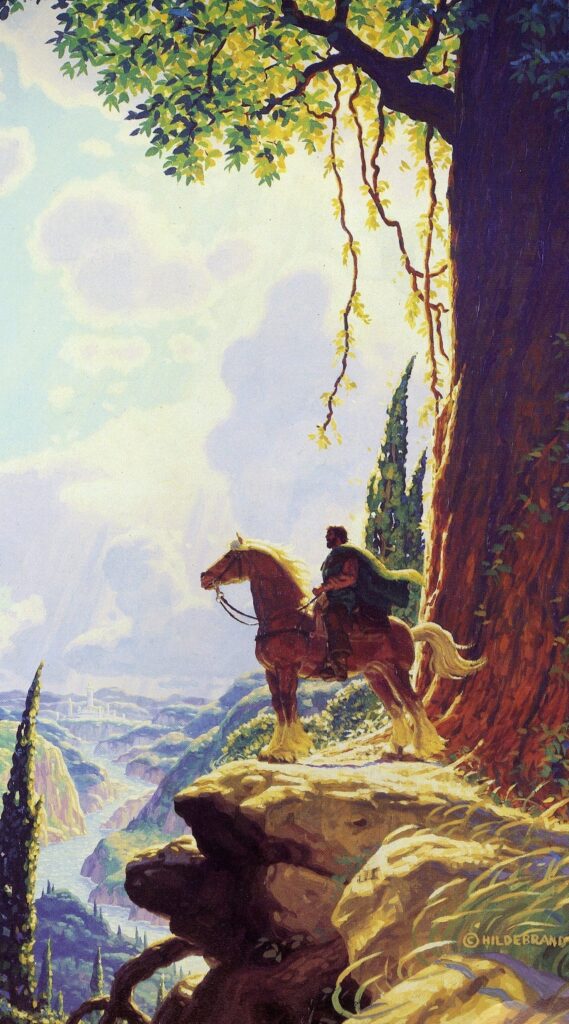
“Urshurak” illustrated Brothers Hildebrandt
“Martian Chronicles” illustrated by Ian Miller

A publisher catalog recently caught my eye in the Irving Wallace papers. A Bantam Books fall 1979 trade paperback edition catalog is comprised, cover-to-cover, of illustrations and artwork. The illustrations include The Martian Chronicles written by Ray Bradbury and illustrated by Ian Miller, and Urshurak written and illustrated by the Brothers Hildebrandt.

The publisher catalog is an interesting find in an archive providing insight into what books were deemed worthy of print, how publishers promoted materials to readers, and what the public was looking for. In this instance, the publisher catalog becomes noteworthy item in and of itself as an amalgamation of captivating illustrations.

Stay tuned, Chelsea Fox

Works Cited

Kosovsky, Bob. “Guide to Music Publishers’ Catalogs: What Is a Music Publisher’s Catalog?” Research Guides. The New York Public Library, January 30, 2023. https://libguides.nypl.org/musicpublisherscatalogs.

Romaine, Lawrence B. A Guide to American Trade Catalogs, 1744–1900. Dover, 1990.

The People’s Almanac

“‘Another almanac?’ you may ask. Not quite. Not really. An almanac, yes, but not the kind that you’ve known all you life or that your ancestors grew up with.” (x)

First Edition Cover, 1975

The People’s Almanac, originally published in 1975, is a compilation of ‘facts and figures’ across time and subject. Whether history, science, technology, health, humanities, or religion, Wallace enumerates noteworthy subjects. The variety of contents include titles such as Unsealing the Time Capsule, Spaced Out, On the Road, All in Sport, and The Unknown and Mysterious.

Book illustration, 1975

To highlight the range of ‘facts and figures’ here are excerpts from the book…

1. Clyde Barrow, notoriously part of the duo of Bonnie and Clyde, preferred Fords because of the speed and gas milage.

2. Atlantis, an island continent, written about by Plato in the 4th century B.C., was supposedly destroyed by an earthquake that plunged it beneath the sea.

3. Percy Bysshe Shelley, know for the poems Queen Mab and Prometheus Unbound, was also known as a revolutionary, an atheist, and a vegetarian.

Stay tuned, Chelsea Fox

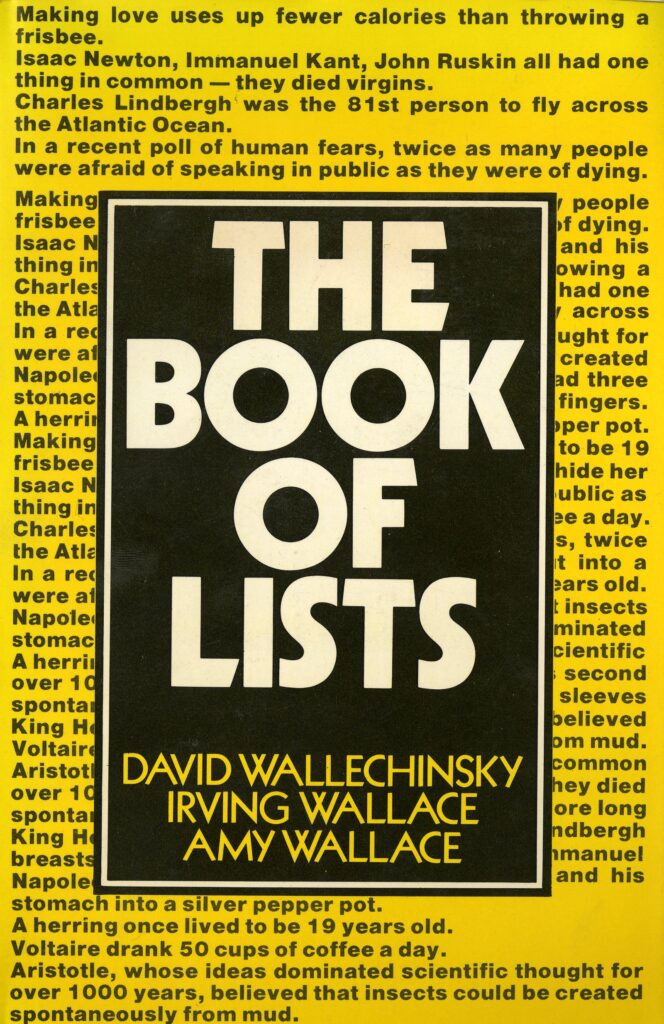
The Book of Lists

“First, we had to ask ourselves: What is a list? The Random House Dictionary defines a list as a series of names or other items written or printed together in a meaningful grouping so as to constitute a record.’ A list, we found is more, much more.” (xv)

British First Edition Cover, 1977

The Book of Lists, originally published in 1977 and co-authored by David Wallechinsky and Amy Wallace, is a miscellany of trivia and facts that resemble fiction. The book introduces and applauds the novelty of the reader with an Oscar Wilde’s quote, “the only sin is to be bored.” Wallace insists that “it is an equal sin to be boring.” A sin for which, as Wallace continues, the “Book of Lists readers are quite unblemished by: for we place high value on curiosity.” (xiii)

Promotional Ad, 1978

The variety of lists range from 30 famous left-handed people such as Carl Philipp Emanuel Bach and Alphonse Bertillon, 20 largest lakes including Malawi and Superior, 20 endangered species from donkeys to bears, 20 wonderful collective nouns for animals like the classic murder of crows or the lesser known clowder of cats, 13 longest words in the English language from 27 letters to 3,600 letters, and 12 epitaphs that never were including George Bernard Shaw’s quote “I knew if I stayed around long enough, something like this would happen.”

Stay tuned, Chelsea Fox